The New SEO Metric: Citation Rate in AI Search
Citation rate measures the percentage of relevant AI-generated answers where your brand appears. While executives chase keyword rankings, AI search creates entirely new competitive dynamics. Here's how to measure and optimize for the metric that actually matters.
Joelle
2026-04-09 · 9 min min read
 Perplexity
 Claude
 Gemini
Executives still ask for keyword positions and organic traffic reports. Those metrics made sense when search delivered ten blue links. Today, Google AI Overviews, ChatGPT, Perplexity, and Claude answer questions directly. Your audience reads the response. Your brand either shapes that response or stays invisible.
Citation rate tells you which.
Citation Rate Defined
Citation rate measures the percentage of relevant AI-generated answers where your brand or domain appears as a cited source.
Take ten high-value queries in your category. Ask ChatGPT, Perplexity, Gemini. Count how many times your brand shows up inside those answers. Divide by ten. That percentage is your citation rate.
Simple. Revealing. Different from ranking.
A page can sit at position three in Google and never appear in Perplexity. Eric Seufert, head of marketing at ironSource and a leading voice on mobile growth, warned last year that:
AI search creates entirely new competitive dynamics where traditional SEO signals no longer predict visibility.
Citation rate closes that gap.
Why Rankings Fail AI Search
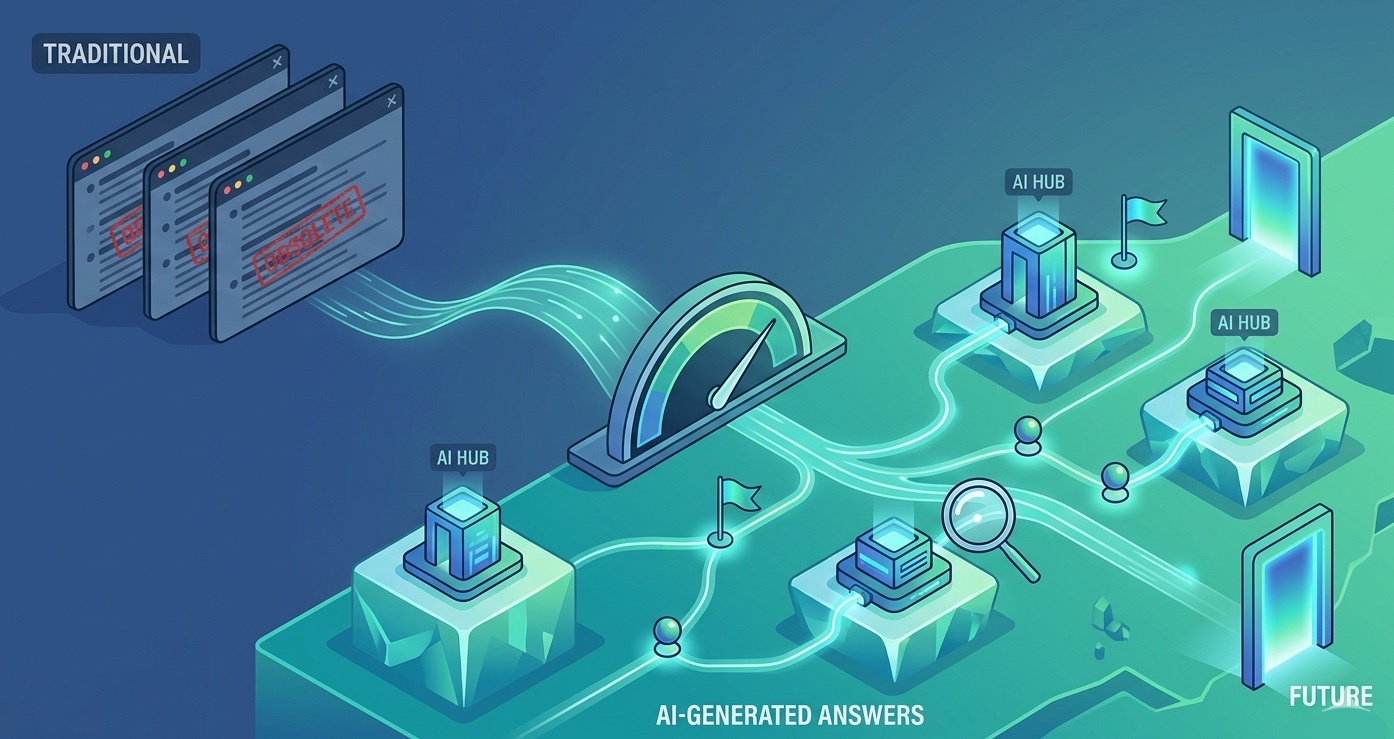
AI systems do not rank pages. They synthesize answers from sources they deem credible.
Recent studies confirm the disconnect. Search Engine Journal found AI Overview citations diverging from organic rankings, with top-ten pages appearing in just 42 percent of generated answers. iPullRank's analysis showed topical authority predicts citations four times better than domain authority.
Rand Fishkin puts it bluntly:
Traffic is the wrong metric when the interface answers the question.
When 50 percent of consumers use AI search and organic referrals grow 357 percent year-over-year, brands need metrics that match the new reality.
The Business Case
Citation rate predicts influence, not just visibility.
Brands cited consistently across models signal authority to both users and AI systems. They shape consideration sets before any click occurs. McKinsey reports half of consumers now start with AI chat interfaces. Gartner forecasts 50 percent organic traffic declines by 2028.
Absence from answers means absence from decisions. As Danny Sullivan of Google has noted:
AI Overviews aim to satisfy the query up front.
This reduces the need for further exploration. Your competitor cited in that overview just won the impression you never had.
How to Measure It
Pick 20-50 queries representing your core demand: branded, category, competitor, buyer intent.
Test across four engines: ChatGPT, Perplexity, Gemini, Claude. Record for each response:
- Brand mention (yes/no)
- Domain citation (yes/no)
- Citation position
- Competitor citations
- Answer sentiment toward your brand
Repeat weekly. Track trends by engine, query type, competitor displacement.
What Drives High Rates
Three patterns separate leaders from laggards.
Content That Extracts Easily
AI prefers pages with statistics, frameworks, primary data. Structured content boosts visibility 40 percent, per the Princeton GEO study. Questions as headings. Tables for comparisons. Dates on updates.
Entity Consistency
Brands maintain identical descriptions across their site, LinkedIn, Wikidata, Crunchbase. LLMs confuse "Acme Analytics" the consulting firm with "Acme Analytics" the dashboard tool without clear disambiguation.
Network Effects
Cited brands appear in peer citations, reviews, comparisons. Reddit threads mentioning your tool predict 66 percent of mention rate variance.
Actionable Steps
- Audit your top 50 queries. Run them now. Baseline your citation rate.
- Fix entity gaps. Claim Wikidata. Align meta descriptions. Add sameAs JSON-LD.
- Publish citably. Every page should contain one unique stat, framework, or dataset.
- Monitor weekly. Citation rate moves faster than rankings.
AI Audit Scan: See Your Citation Rate Instantly
Most brands guess at AI visibility. AI Audit Scan measures it.
We test your domain across ChatGPT, Claude, Gemini, Perplexity on queries that matter. You get your citation rate, competitor benchmarks, and the 30 signals driving your score.
Enter your domain at aiauditscan.com. Know exactly how often AI cites you versus the brands eating your market share.
The New SEO Metric: Citation Rate in AI Search
Sources
| # | Source | Publication |
|---|---|---|
| 1 | Princeton University et al., GEO: Generative Engine Optimization, KDD 2024 | amicited.com |
| 2 | iPullRank, From Clicks to Citations, 2026 | ipullrank.com |
| 3 | ZipTie.dev, Citation Rate vs Mention Rate, 2026 | ziptie.dev |
| 4 | Search Engine Journal, AIO Citations Diverge From Rankings, March 2026 | searchenginejournal.com |
| 5 | The Digital Bloom, 2026 AI Citation Position Report | thedigitalbloom.com |
| 6 | Siftly, AI Citation Tracking Tools for Brands, 2026 | siftly.ai |
| 7 | BrandRadar, Measuring GEO Visibility in 6 Steps, 2025 | brandradar.ai |
| 8 | Gartner (via Geneo.app), 25% Search Decline 2025 AI Tools | geneo.app |
| 9 | Averi, What Is AEO/GEO and Why Should Marketers Care | averi.ai |
| 10 | Collaborate Princeton, GEO: Generative Engine Optimization | collaborate.princeton.edu |
Ready to Check Your AI Visibility?
See how your e-commerce site compares to the 409 sites I analyzed. Get a detailed AI readiness report in seconds.